There is no single Japan.
Think of Japan as a conversation between places rather than a single aesthetic. Kyoto’s court, temple and craft traditions help explain its seasonal meals, formal gardens and fine ceramics. Osaka’s food is often more immediate and sociable: a hot plate, a counter, a round of small dishes. Tokyo is a collection of neighborhoods with very different tempos, not one futuristic downtown.
Those are useful starting points, not personality tests for residents. A quiet Osaka tea room and a boisterous Kyoto bar are not exceptions to a rule. Regional identity gives you a reason to explore; it should not become a stereotype you impose on every interaction.
On a first route through these cities, contrast is more interesting than duplication. Give Kyoto time to unfold on foot. Eat across several Osaka neighborhoods. Let a short Tokyo stay concentrate on one world—food, design, street life—rather than attempt the entire metropolis.
Shrine, temple, living place.
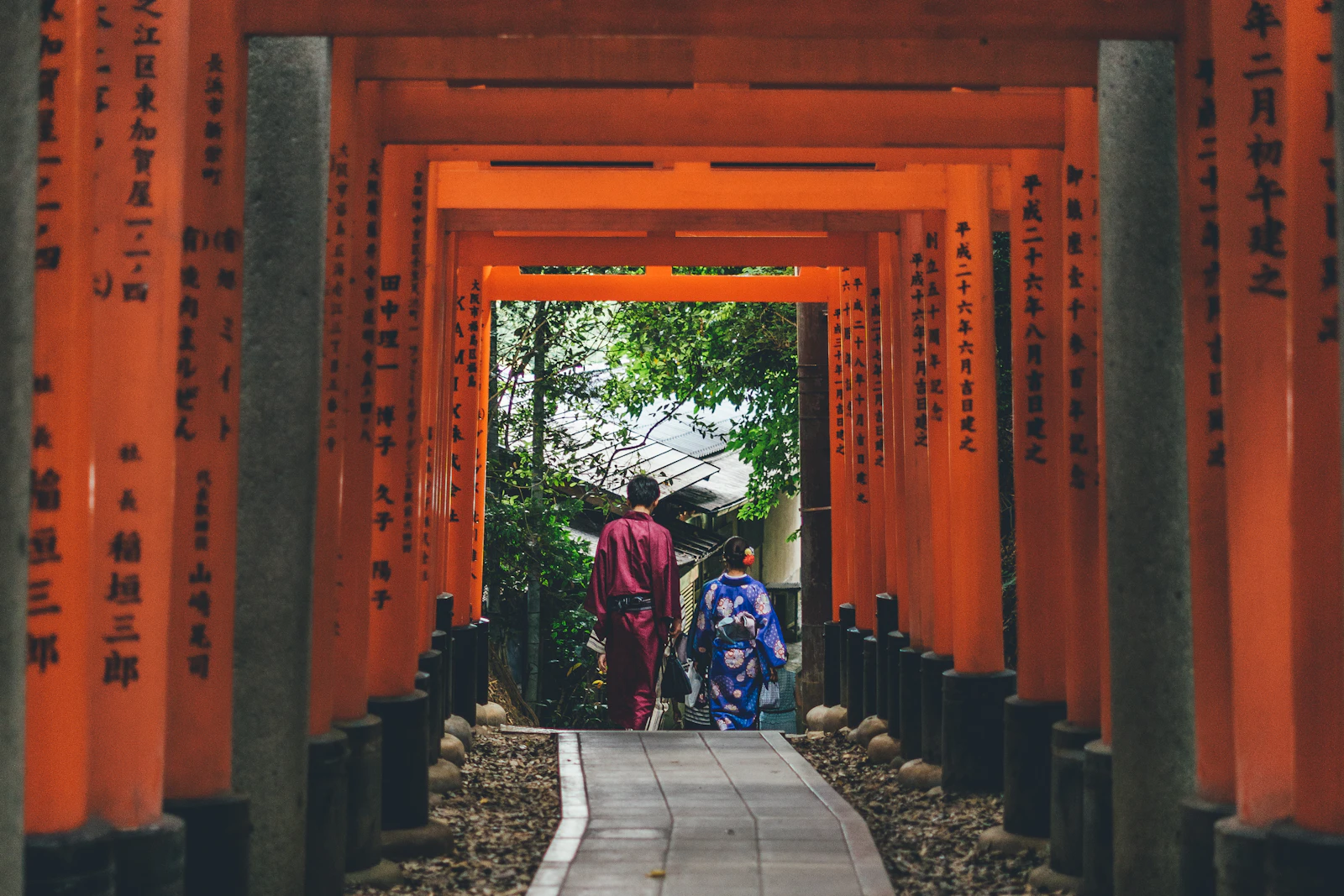
A Shinto shrine and a Buddhist temple are not interchangeable “Japanese temples.” Torii gates are a familiar sign of a shrine; temple complexes often have substantial gates, halls and Buddhist imagery. Both belong to living religious practice as well as cultural heritage. People may visit for prayer, a family occasion, a seasonal event or a walk.
You do not need to perform a ritual you do not understand. Follow posted instructions and the behavior of respectful visitors; if you are unsure, observing quietly is entirely appropriate. Shrine clapping is not a universal ritual to reproduce inside a Buddhist hall. Shoes, photography and access rules vary by building.
A good visit needs less commentary than you might think. Put the phone down for a few minutes. Notice how a garden is framed from the room, where light catches a wooden surface, and where people stop to pray. The experience is not improved by reaching every hall before lunch.
Seasonality is an organizing idea.
In a Kyoto meal, an ingredient, a vessel and the arrangement of a room may all be pointing to the season. This is one reason the same format can be worth experiencing at different times of year. A meal is not only a list of premium ingredients; it is also a sequence of textures, temperatures and small decisions.
Late autumn invites slower gardens and evening light, but “autumn” is not a guaranteed peak-foliage date. Color depends on conditions and elevation. Booked night openings have a schedule; leaves do not. Choose a place you would still enjoy if the foliage were merely good.
Carry layers rather than making the day’s warmest hour your packing assumption. A temple garden, a station platform and a heated train can feel like different seasons. Comfortable shoes and a small bag do more for a day than an extra change of fashionable clothes.
Courtesy is mostly about reducing friction.
Lower your voice on public transport, make room for people getting off before you board, and keep bags out of the flow. Follow the actual queue and signs rather than relying on a remembered escalator rule. Avoid eating or drinking where a venue or train does not welcome it.
Take off shoes when indicated and avoid stepping onto a clean interior floor with outdoor footwear. At restaurants, use the payment tray when one is offered. Tipping is generally not expected; a sincere thank-you is usually more natural than trying to leave extra cash.
Do not photograph someone simply because their clothing makes the scene interesting. In Kyoto’s historic lanes, a working geiko or maiko is a person going somewhere, not a public attraction to pursue. Private lanes, shop interiors and temple halls may prohibit photography. The absence of a fence is not consent.
The useful principle is not to memorize a hundred prohibitions. Notice who shares the space and what your action asks of them. If a rule is unclear, ask. If you make a small mistake, apologize and adjust without turning the moment into a performance.
A few words, used well.
Sumimasen is the useful opening: excuse me, or a small apology. Arigatō gozaimasu is a polite thank-you. O-kaikei onegaishimasu asks for the bill. Speak clearly and calmly; louder English is not easier English.
Keep a translation app ready with the relevant language downloaded, but do not assume it understands a cancellation contract or an allergy. Show the written hotel or restaurant name, not only its English pronunciation. Japanese addresses and station exit numbers are often more useful than a vague landmark.
At a small counter, point to a menu item and confirm the quantity. When you need something important—medical help, an ingredient exclusion, a deadline—use written information and a clear confirmation rather than a string of approximate phrases. Cultural curiosity and practical humility work well together.