Build contrast into your eating.
Three elaborate dinners in a row do not necessarily teach you more than one excellent dinner and two very different ordinary meals. Vary the format as well as the cuisine: a counter, a set lunch, a food-hall browse, a neighborhood izakaya, one carefully chosen splurge.
Use lunch for something you genuinely want, not automatically as a cheaper version of dinner. Menus, portions, ingredients and cancellation terms may differ. Compare the actual course rather than relying on the familiar claim that lunch is always the bargain.
Do not fill every open slot with a reservation. Japan rewards appetite you have not already allocated. Keep one or two fallback meals near the day’s district, so a full restaurant does not become a long journey in search of the same dish.
Osaka: heat, dashi and a generous appetite.
Takoyaki: small octopus-filled batter balls, best approached freshly cooked and cautiously hot. Compare texture as well as toppings; a soft center is part of many versions, not necessarily an undercooked failure.
Okonomiyaki: cabbage-and-batter comfort cooked on a hot plate, with toppings and style varying by establishment. Ask what the house does well and let the staff guide the cooking or serving arrangement. Do not confuse the different regional forms into one national recipe.
Kushikatsu: breaded fried skewers, with meat and vegetables opening up plenty of small-order possibilities. Follow the shop’s current sauce instructions. Udon: an important quieter stop, where the interaction of broth and noodle can be the attraction. Box sushi: a pressed Osaka form worth choosing instead of repeating another nigiri meal.
The simplest strategy is to order fewer things than you think, then reassess. Sharing a snack portion can preserve enough appetite for a proper meal. An evening becomes more interesting when you can still say yes to something unexpected.
Fresh takoyaki
Share a freshly cooked portion, allow it to cool and follow the stall’s eating/disposal guidance.
Okonomiyaki at the hot plate
Cabbage, batter and toppings in a regional comfort-food form; follow the staff’s serving rhythm.
Dashi-led Osaka udon
A softer, broth-focused counterpoint to a heavy snack itinerary.
Try Osaka box sushi
Pressed sushi offers a regional form beyond the familiar nigiri counter.
Kyoto: season, stock, vegetables and tea.
Kaiseki is best appreciated as a sequence, with seasonality, preparation and presentation working together. Kappo can bring the cooking and counter interaction closer to the guest; exact formality and ordering differ by restaurant. Choose a room whose language, price and pace suit you.
Obanzai brings you toward everyday Kyoto cooking. Look for a selection that shows different preparations rather than only the most immediately recognizable ingredient. Tofu and yuba deserve attention for texture and the surrounding broth or seasoning, not as consolation food. Saba-zushi and Kyoto vegetables offer other regional directions.
Vegetable-led does not automatically mean vegetarian: dashi may contain fish. Nor does tofu automatically mean gluten-free. State dietary requirements in advance and get an establishment-specific answer, especially when the menu is fixed.
End with wagashi and tea sometimes rather than another large Western-style dessert. Ask how the tea is meant to be prepared and enjoyed. You are tasting a relationship, not just buying the brightest green powder.
Make room for obanzai
Everyday Kyoto-style dishes alongside your formal meal; ask what is seasonal and how ordering works.
Taste tea at Ippodo
Compare a tea you can brew at home; check the main store’s second-Wednesday closure.
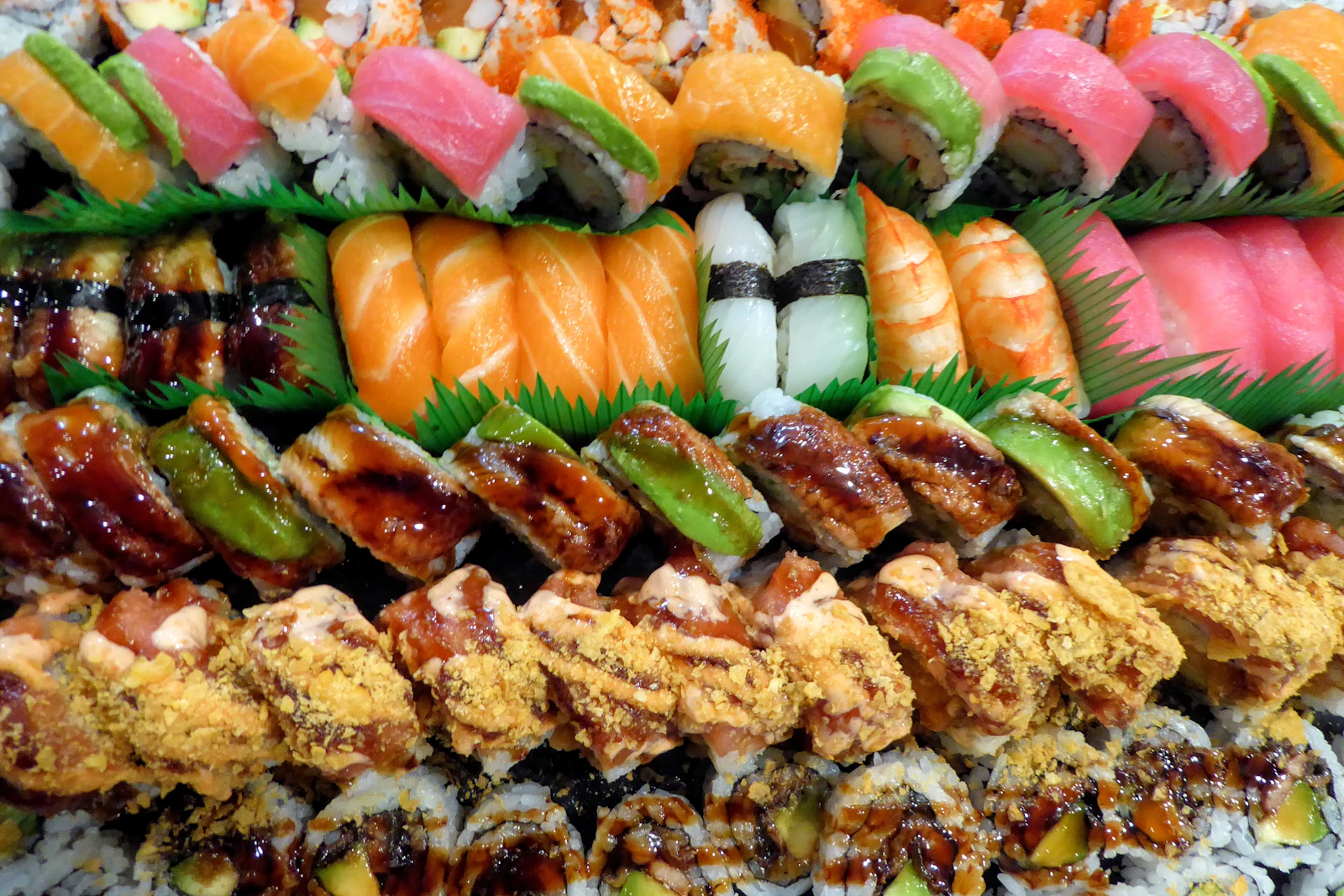
Sushi is rice as much as fish.
Sashimi is not simply “sushi without rice” as an ordering category: it is its own preparation. Nigiri places a topping over seasoned rice; rolls and regional pressed forms create different balances. Notice temperature, rice texture, seasoning and the relationship between bite and topping.
At an omakase counter, ask in advance how allergies and dislikes are handled. Tell the restaurant about a genuine exclusion rather than silently leaving pieces. Follow the chef’s suggested seasoning and order; not every piece needs more soy sauce. Avoid overwhelming a small room with fragrance.
You do not need to convert dinner into an etiquette exam. Eat attentively and ask when uncertain. The important distinctions are practical: what the course includes, whether drinks are extra, how long service takes and what the cancellation contract actually says.
If learning interests you, choose a class by the tasks you perform. Mixing rice, supervised slicing and making nigiri teach different things from watching an expert fillet a whole fish. Neither is automatically a substitute for the other.
Learn sushi with Nonta
English, supervised slicing and nigiri; the operator lists selected weekdays and ¥19,800 per person.
The meals that round out the trip.
Yakitori: use a counter meal to compare cuts and preparations rather than ordering only the chicken you already recognize. Confirm what a course or minimum order includes. Tempura: notice batter, oil and timing; a smaller focused meal can be more revealing than a large mixed platter.
Ramen: choose by the style you actually want—lighter or richer, salt/soy/miso-led, texture and toppings—rather than assuming the longest queue is a universal recommendation. Ticket-machine restaurants may require ordering before you sit; prepare cash if the machine or venue needs it.
Kobe beef: choose it deliberately once if it interests you. Verify that the course is actually Kobe beef, distinguish it from other wagyu and selected beef, and make the portion part of a balanced meal rather than a challenge.
Depachika and a good convenience-store stop: ordinary food is part of understanding a place. Prepared dishes and sweets can be illuminating; respect where eating is allowed and do not substitute a week of snack purchases for the meals you came to experience.
Order the actual Kobe-beef course
Compare certified Kobe beef with the restaurant’s other selected beef before choosing a menu.
Drink locally. Buy bottles selectively.
For sake, describe a style you enjoy and ask for a comparison. Temperature and food pairing matter; prestige labels are not the only route to an interesting pour. For beer, look for a current local tap list rather than treating an old photograph of the board as today’s inventory.
For whisky, taste before committing luggage weight and money. Japanese-looking branding alone does not establish that a whisky meets the industry’s Japanese-whisky standard. World blends can be enjoyable, but they are a different purchase. Ask what is actually in the bottle and compare your interest with the asking price.
At a small cocktail bar, a cover charge, tax, minimum order or reservation arrangement may materially change the bill. Bar Rocking Chair’s official guest information is a useful reminder to check the whole bill rather than compare only a single listed pour.
A deliberate drink at Rocking Chair
A researched cocktail/whisky lead with a cover charge; verify the total and current seating arrangement.
A short ordering and reservation playbook.
- Before booking: confirm branch, party size, language, seating type, course, allergies, cancellation cutoff and whether charges are per person.
- At the door: wait to be seated; a free-looking counter may be reserved or follow a house format.
- Before ordering: understand cover charges, minimums, tax/service and whether the quoted course includes drinks.
- When paying: ask whether payment happens at the counter and whether splitting is possible; do not assume the small room can reproduce your home-country payment routine.
- If something is unclear: ask early, use written information and keep the request specific.
Allergies deserve a real conversation, not optimism. Translation apps are aids, not a guarantee that a kitchen can safely accommodate a requirement.